25 Jul 2026
Evaluating Shifts in Blackjack Expected Values Across Game Types With Loyalty Rewards Factored In
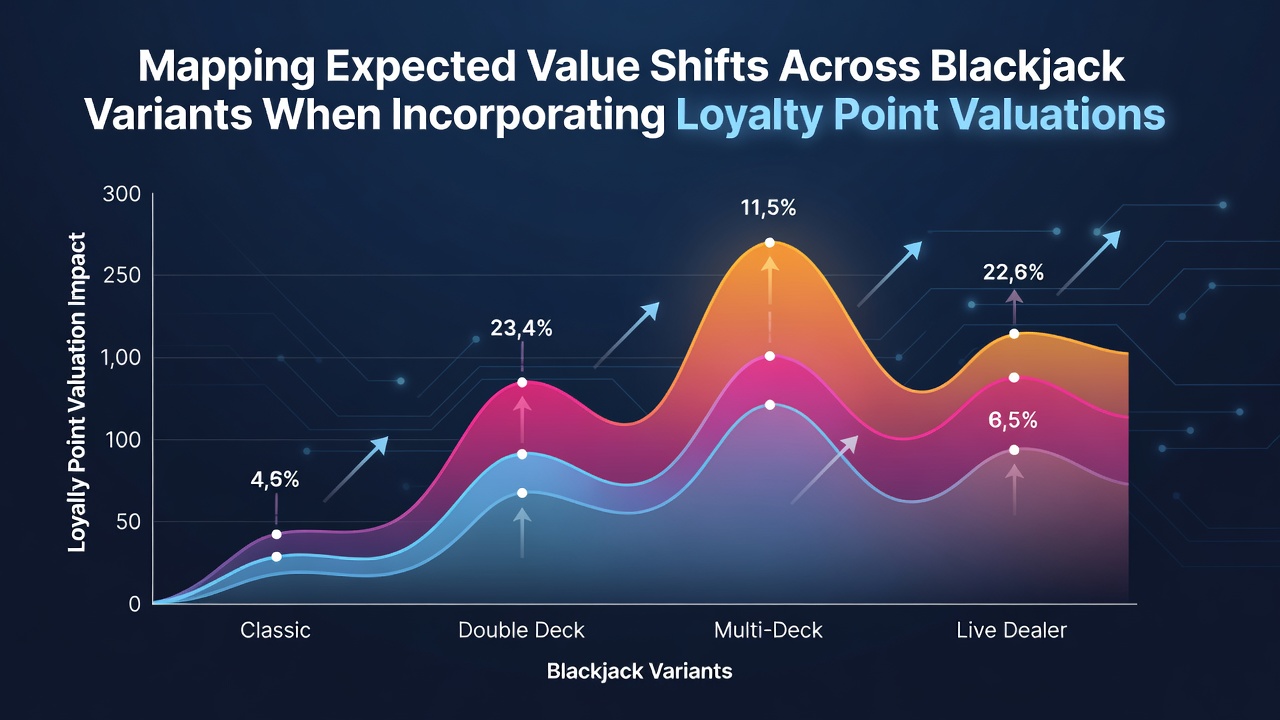
Blackjack variants differ in rules that directly alter baseline house edges, and loyalty point valuations introduce an additional layer that modifies player expected value across each format. Data from regulatory filings indicate that single-deck games carry house edges near 0.15 percent under optimal play whereas multi-deck shoe games often range between 0.40 and 0.70 percent depending on penetration and payout structures.
Core Mechanics of Expected Value Calculation
Expected value in blackjack equals the sum of all possible outcomes weighted by their probabilities, and observers note that loyalty points add a positive offset when casinos assign monetary redemption values to accumulated points. Researchers at academic gaming centers have documented that a point valued at 0.75 cents per dollar wagered effectively reduces the house edge by that amount on every bet placed. This adjustment scales linearly with volume yet varies when different rule sets change the frequency of hands completed per hour.
European no-hole-card blackjack presents one distinct profile because the dealer checks for blackjack only after players complete their actions, which raises the base house edge slightly above standard multi-deck offerings. When loyalty valuations enter the equation the net player edge improves proportionally, yet the absolute gain remains smaller than in games already offering favorable rules such as double-after-split permissions and surrender options.
Comparative Analysis Across Rule Sets
Spanish 21 removes the ten-value cards from the dealer’s potential holdings while granting players additional doubling and surrender choices, resulting in a base house edge that can fall below 0.40 percent with optimal strategy. Loyalty point integration shifts this figure further into positive territory once the assigned point value exceeds the residual house edge. Double-deck games occupy an intermediate position where lower deck counts reduce variance yet still require careful accounting for the loyalty offset applied to each resolved hand.
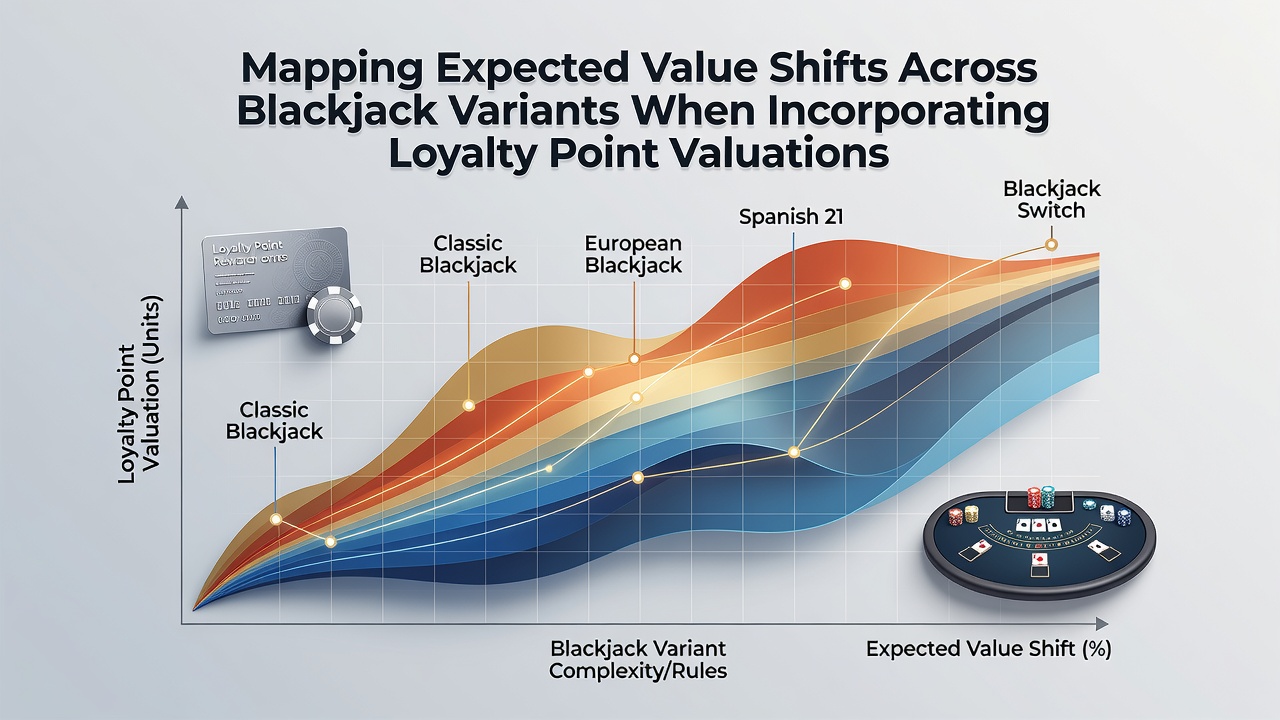
Continuous shuffle machines maintain a constant deck composition that prevents card counting advantages, and analysts have recorded house edges around 0.80 percent in such environments. Loyalty rewards narrow this margin when redemption rates reach or exceed one percent of theoretical loss, creating measurable crossover points where certain variants transition from negative to neutral or positive expectation for high-volume players.
Regional Data and July 2026 Observations
Figures released by the Nevada Gaming Control Board through July 2026 show increased adoption of tiered loyalty structures across Strip properties, with point valuations ranging from 0.50 to 1.25 cents depending on player tier. These adjustments produce documented shifts in player return rates that differ measurably between single-deck and shoe games operating on the same casino floor.
Industry reports compiled by university research groups indicate that Atlantic City properties applying similar loyalty frameworks recorded parallel patterns, where European-style rulesets experienced smaller net improvements compared with games that already permitted favorable doubling and splitting combinations. The interaction between rule set and point valuation therefore requires case-by-case mapping rather than generalized assumptions.
Practical Mapping Methodology
Analysts construct these maps by first establishing the precise house edge for each variant under standardized playing conditions, then subtracting the loyalty redemption rate expressed as a percentage of action. Because hands per hour differ across formats, observers adjust the calculation to reflect time-based accumulation rates, which produces variant-specific breakeven thresholds. For instance a game completing 80 hands per hour reaches neutrality sooner than one limited to 60 hands when point values remain constant.
Additional factors include comp valuation accuracy and point expiration policies that can erode the theoretical offset. Data from Canadian provincial gaming authorities demonstrate that programs with rolling 12-month expiration windows preserve more value than those resetting quarterly, thereby sustaining the expected value uplift across longer play sequences.
Conclusion
Mapping expected value shifts requires systematic subtraction of loyalty offsets from each variant’s documented house edge while accounting for hands-per-hour differentials and redemption mechanics. Evidence from multiple regulatory jurisdictions confirms that the magnitude of improvement varies directly with baseline rules, and players who track these relationships can identify formats where loyalty integration produces the largest net movement toward positive expectation.